Showing posts with label eggs. Show all posts

Monday, May 2, 2016

Hunting chicken eggs

Why Easter was never any fun.

   As a kid growing up here in Fallon, Nevada we always raised our own chickens. Dad would place a fake egg in the nest box so the hens would lay their eggs where he wanted them to. But this did not always work, especially with chickens that were being raised free range. One of my daily chores was to find all the rogue chicken nests and collect the eggs. Needless to say, by the time Easter rolled around I was sick of hunting for chicken eggs.
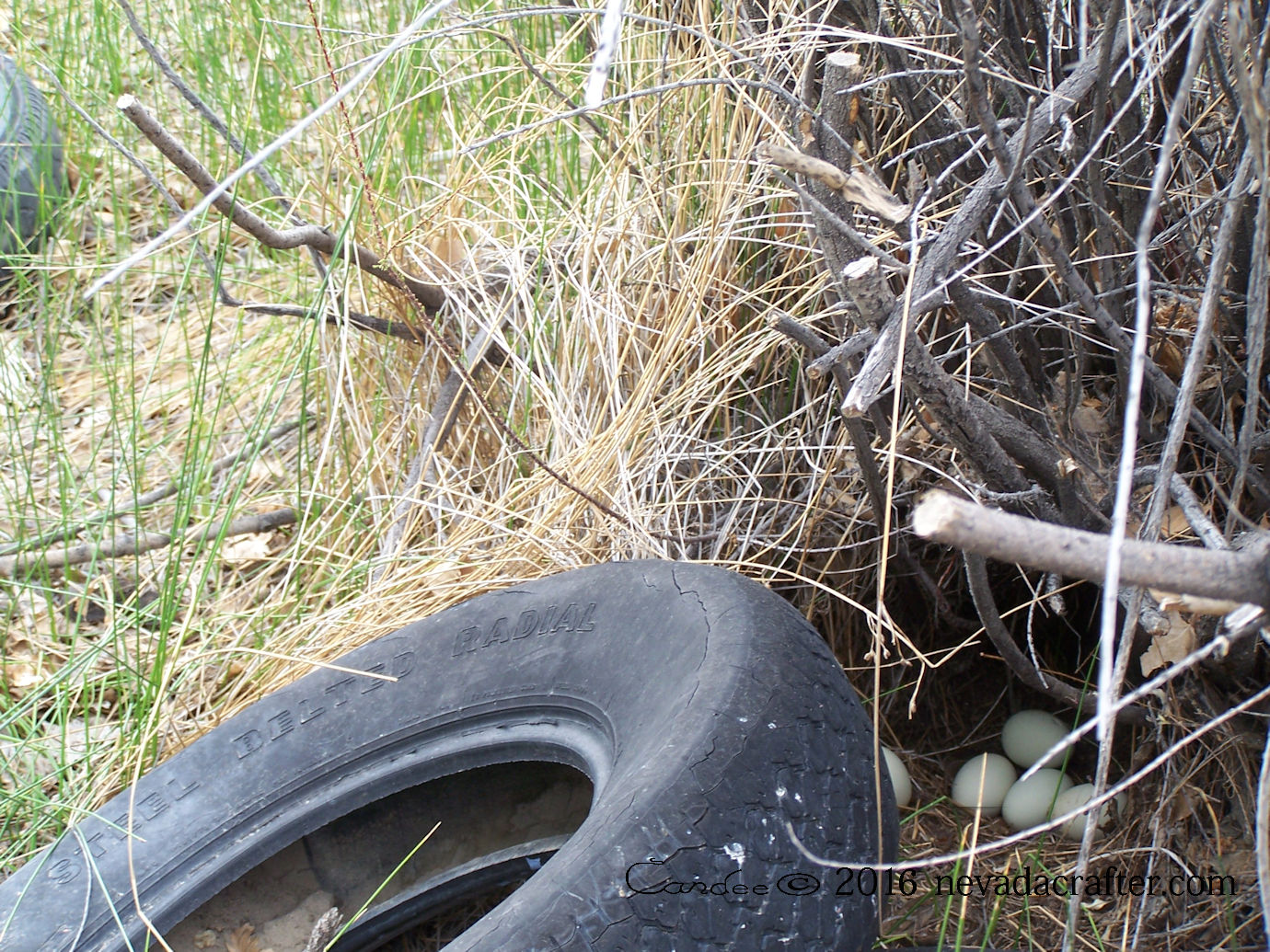
    As you can see here in the photo things haven't changed much. This is a rogue nest belonging to an Ameraucana chicken and what makes it worse is that they lay colored eggs. Now this breed is not the most egg productive but I have found them to be very resilient to cold weather and when being raised free range they are quite happy to take care of themselves for the most part, with the exception of an occasional feeding to remind them where home is. Rather than trying to force the hen to lay her eggs where I want them, I simply mark the nest, leave a dummy egg in the nest and continue to collect eggs.

Monday, April 8, 2013

poultry eggs


    Poultry eggs come in a variety of sizes and colors. Quayle and Partridge eggs are generally the smallest, usually about thumbnail in size. Bantam eggs are generally half the size of a chicken. Turkey and goose eggs are generally 2 1/2 to 3 times the size of a chicken egg . Chicken eggs come in small, medium, large, extra-large and every once in a while ouch, a double yolker. The following is an example of some of those eggs.
     Just as in humans chickens from time to time will have twins (double yolk egg). My father told me stories of living on the homestead and how some of these eggs would hatch out. On occasion Siamese twins were the result but that rarely did they survive more than a few hours. Most eggs simply did not hatch at all and generally were collected for eating. Oddities and defective eggs will occur, including eggs that have no yoke. Usually these eggs are about the size of a golf ball or smaller. There is no need to be concerned unless the oddities occur on a regular basis. In which case consulting with your local cooperative extension office http://www.csrees.usda.gov/Extension/ may be a good idea.
        Something else that should be kept in mind is that eggs are good indicator of how healthy your poultry flock is. When I collect or eat eggs I make note of the condition and coloration. If eggs are being broken on the nest it is possible that the chickens are not getting enough calcium. A supplement to their diet can be oyster shell, which I buy in the large 50 pound bags. Oyster shell will keep for years and is cheaper in the larger bags (1lb bags can cost as much as a 50lb bag). You may also feed them the egg shells from the eggs that you eat. But it is extremely important that you crush the egg shells so they do not recognize the egg shells as eggs. This is to prevent the hens from cannibalizing their own eggs. If you start to get eggs that are difficult to break when cooking, it is possible that your hens are getting too much calcium. If you find blood spots in your eggs it is possible your hens are eating meat or something else. Also make sure that you're laying hens are not eating the baby chicken feed, as this usually has antibiotics in it and would make the eggs not safe to eat. Light-colored yokes are an indicator that the chicken is not getting enough greens or insect proteins. This is also why store-bought eggs are a very light yellow in color and free range chicken eggs are usually orange and have a better taste.


Tuesday, March 5, 2013

Nesting boxes

The best and least expensive nesting boxes are made from 5 gallon plastic buckets.
Round or square it doesn't matter, square buckets just stack easier. Check with your local restaurants to see if they have any they're throwing out. Many restaurants will give them to you free or at low cost.
Simply cut a hole in the lid or bottom and you have your instant sanitary nesting box. Make sure you leave a fairly large lip on the bottom edge. A 3 " lip should keep eggs from rolling out. Add straw or other nesting material to keep your eggs clean and the box is ready to go. Note: good nesting material such as straw eliminates most of the need for a bubblier to clean the eggs and instead of having to clean all your eggs you only have to clean a few. It can be screwed to a wall or placed in a wood rack. Be sure and mount your nesting box lower than the roost so the chickens do not try to roost in or on the nesting box. This will also keep them from defecating in or on the nest box. The plastic nesting box will be cleaner than a wooden box and will help prevent mites and other parasites. 
   Note; if you intend for your chickens to hatch their own eggs, be sure and place the nest box in a spot close to the ground. The mother hen will try to lead her chicks back to the nest they hatched out of each night. If the nest box is high off the ground the mother hen will not be able to get her chicks back into the nest and they may not survive. Not to mention the baby chicks trying to get out of the box high off the ground may fall to their death. The buckets also makes it easy to relocate the hen and her chicks if need be.
cat litter box re-purposed as a chicken nesting box
     Nesting boxes can be made from just about anything. The nesting box to the right was made from a cat litter box. Stones were placed on the lid to keep the box from blowing away in the wind and in front of the opening for easy access. A nesting egg (fake egg) is placed in the nest to encourage chickens to use the nest. Plastic Easter eggs also work really well for this. Be sure to weight the eggs down and glue them shut. Keeping in mind that a nesting box close to the ground is vulnerable to predators, I placed this one inside the chicken run for added protection.

Commercial nesting boxes are available such as the one above. And can be easily mounted to the inside wall of your chicken coop.